AI is heading to the edge
Latency, privacy, cost and availability all pull inference local. 2026 is the tipping point: sub-20 ms vision in production, small models displacing large ones, an edge-AI chip market past $80B by 2036.25
A decade of inference in hyperscale datacenters. The next decade runs it on the device — the labs and the analysts point the same way.
A round-trip to a datacenter and back costs 100–300 ms before the model even runs.
Control and safety close the loop in <20 ms, on the device.25
Camera, audio and biometric streams leave the building to be inferred.
The stream never leaves the sensor. Local by construction, not by policy.7
Every inference on a datacenter GPU is paid for twice — in cost, and in watts.
Paid once, at the sensor, in single-digit watts.2
No link, no AI. Factories, vehicles and remote sites lose the model with the network.
Keeps working offline — the link becomes an optimisation, not a dependency.9
The edge belongs to silicon that can adapt.
Latency, privacy, cost and availability all pull inference local. 2026 is the tipping point: sub-20 ms vision in production, small models displacing large ones, an edge-AI chip market past $80B by 2036.25
The future is heterogeneous. GPUs train; ASICs win high-volume fixed inference; FPGAs win the adaptable, deterministic, long-life edge — and are the low-NRE on-ramp to an ASIC.26
And the edge wants high performance, low power and real time — all at once.
GPUs, CPUs and fixed ASICs each make you pick. A reconfigurable SoC-FPGA becomes whichever accelerator the workload needs, which is why it is worth a product line and a research program, now.
Not our thesis — theirs. The players with the most to lose are putting inference on the device, in the car and on your face.
“Whoever has presence on the edge is going to win. The edge is where the humans are.”
“Every edge device will become autonomous. Every edge device will have agentic systems.”
“Gemini Nano — our most efficient model for on-device tasks — runs locally on the phone.”
“You can't have one data center in Texas and say I'll serve the world from there. You need an inference fleet everywhere.”
The vendors shipping FPGA-AI silicon today, and the frontier challengers turning reconfigurable fabric into AI products.
The FPGA-AI leader: Versal adaptive SoCs, Kria SOMs, and the Vitis AI / FINN software stacks.
Agilex FPGAs with AI Tensor Blocks; the FPGA AI Suite plugs into the OpenVINO toolkit.
PolarFire SoC (RISC-V + FPGA) with very low static and radiation-tolerant power; VectorBlox SDK.
Small, mW-class FPGAs (Nexus, Avant) with the sensAI stack for always-on edge vision & audio.
Quantum-architecture Titanium/Trion FPGAs aimed at efficient TinyML and edge-vision inference.
Speedster7t FPGAs and Speedcore eFPGA IP; powers production speech recognition with Myrtle.ai.
Open-source eFPGA IP plus EOS S3 for always-on, battery-powered sensor and voice AI.
Low-cost FPGAs bringing edge ML into high-volume consumer and IoT devices.
InferX AI-inference accelerator and EFLX embedded-FPGA IP — reconfigurable inference blocks.
Sparse ML acceleration; FPGA-based real-time automatic speech recognition at datacenter scale.
FPGA-accelerated real-time video-analytics and inference pipelines for the edge & cloud.
Zebra FPGA inference engine for drop-in CNN acceleration — acquired by AMD in 2023.
Established vendors span AMD, Intel/Altera, Microchip, Lattice, Efinix, Achronix, QuickLogic & Gowin; frontier names push FPGA / eFPGA into turnkey AI.
The international FPGA & AI calendar, scientific and business, to publish, recruit, partner and sell.
Recurring annual events; anchor dates shown for 2026, others list the usual window & host region, confirm nearer the date.
Big-picture perspective from the TED stage: where AI is heading, the hardware it runs on, and the two forces that push it onto the device — small models that no longer need a datacenter, and privacy that no longer tolerates one.
Curated TED & TEDx talks. Video content © respective creators / TED.
HLS automation, spatial LLM accelerators, agentic chip design — a global research wave, maturing fast. The labs behind it: §10.
The leading hardware-AI labs are actively advancing FPGA acceleration — a live frontier, and a ready talent pool. Click any lab for its dossier.
A research partnership with one of these groups is part of the plan.
From language models to speech and vision, the same reconfigurable die maps to wildly different AI workloads. Click any card for its research dossier, papers, findings & feasibility.
FlightLLM 6× energy vs V100 · SSR 8.5× vs A10G · spatial-LLM 16.1× BERT · ternary edge LLMs (TeLLMe).4
TerEffic 370M fully on-chip: 192× tok/s vs Jetson Orin Nano · SECDA TinyLlama 11× token latency on PYNQ-Z1 · BitNet ternary at 2B.37
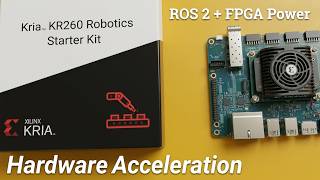
FINN sub-µs latency at 1-bit · Kria KV260 ~25 FPS within ~5 W · hls4ml in production trigger systems.6
Real-time FPGA transformer & VLM designs for vision; ViT/CLIP run on edge accelerators today.32
EdgeDRNN: sub-ms latency at 2.3 W, 4× efficiency vs Jetson Nano · Myrtle.ai on Achronix: 16× perf/cost vs GPU.29
Every workload here is proven or productized on FPGA — open a card for its papers, findings & feasibility verdict.
Real repositories running AI on SoC-FPGAs, by area — from YOLO on the Kria to LLMs on fabric, plus the toolchains underneath.
Community demos, challenge entries and research repos alongside the vendor toolchains (Vitis AI, FINN, Brevitas, PYNQ, hls4ml). Repo content © respective authors.
Same decade, same database — but one query per workload. The five curves do not tell the same story, and the gaps between them are the opportunity.43 Click any year on a card to read the papers behind that bar.
Generative AI
Nothing, then everything: 2× in 2024, 2× again in 2025.
Small language models
Nine papers, ever — eight of them in 2025. Unclaimed ground.
Vision & classic DL
5,244 papers, and flat since 2021. This question is answered.
Multimodal
Born 2021. Inherits the LLM engines rather than needing new ones.
Audio
Flat for a decade at ~35/yr. Not dying — solved.
Papers per year, log scale — five series spanning 8 to 829 have no honest linear axis. Read the shapes, not the heights.
CNN is answered; SLM is empty; LLM is on fire. Vision on FPGA has 5,244 papers and a curve that stopped growing in 2021 — that argument is over, and won. Generative work is doing in two years what CNN took a decade to do. And the workload this brief backs hardest, a small language model on an edge FPGA, has nine papers in history. That is not a warning. It is the whole reason to move now.
Counts are published works from OpenAlex, queried 14 Jul 2026, by publication year, one title & abstract query per workload. Keyword search is a proxy, not a census — and the SLM query excludes the bare word “ternary”, which in an FPGA corpus matches ternary CAM, not language models. 2025 is still being indexed: every 2025 figure is a floor, not a ceiling.
Abstract · the authors’ own wordsTransformer-based Large Language Models (LLMs) have made a significant impact on various domains. However, LLMs' efficiency suffers from both heavy computation and memory overheads. Compression techniques like sparsification and quantization are commonly used to mitigate the gap between LLM's computation/memory overheads and hardware capacity. However, existing GPU and transformer-based accelerators cannot efficiently process compressed LLMs, due to the following unresolved challenges: low computational efficiency, underutilized memory bandwidth, and large compilation overheads. This paper proposes FlightLLM, enabling efficient LLMs inference with a complete mapping flow on FPGAs. In FlightLLM, we highlight an innovative solution that the computation and memory overhead of LLMs can be solved by utilizing FPGA-specific resources (e.g., DSP48 and heterogeneous memory hierarchy). We propose a configurable sparse DSP chain to support different sparsity patterns with high computation efficiency. Second, we propose an always-on-chip decode scheme to boost memory bandwidth with mixed-precision support. Finally, to make FlightLLM available for real-world LLMs, we propose a length adaptive compilation method to reduce the compilation overhead. Implemented on the Xilinx Alveo U280 FPGA, FlightLLM achieves 6.0× higher energy efficiency and 1.8× better cost efficiency against commercial GPUs (e.g., NVIDIA V100S) on modern LLMs (e.g., LLaMA2-7B) using vLLM and SmoothQuant under the batch size of one. FlightLLM beats NVIDIA A100 GPU with 1.2× higher throughput using the latest Versal VHK158 FPGA.
arXiv:2401.03868 · ACM/SIGDA FPGA '24 · Monterey, CA
Three FPGA-specific answers to three named failures of the GPU on a compressed model. A configurable sparse DSP chain, so mixed sparsity patterns still keep the multipliers fed. An always-on-chip decode scheme, so the bandwidth-bound half of inference stops paying DRAM. And a length-adaptive compiler, so a prompt of an unexpected length is not a recompile — the thing that makes an accelerator a product rather than a demo.
Against commercial GPUs running the same compressed model on a real stack: vLLM with SmoothQuant, LLaMA2-7B, batch size one. The energy and cost wins are measured on an Alveo U280 against a V100S; the throughput win needs the newer Versal VHK158 to pass an A100.
Batch size one throughout — the regime where a GPU is weakest, because it has nothing to amortise the weight fetch across. At large batch the A100 still wins, and the paper never claims otherwise. Read this as the edge/latency case, not as a datacenter throughput result.
Abstract · the authors’ own wordsDeploying Large Language Models (LLMs) efficiently on edge devices is often constrained by limited memory capacity and high power consumption. Low-bit quantization methods, particularly ternary quantization, have demonstrated significant potential in preserving model accuracy while substantially decreasing memory footprint and computational costs. However, existing general-purpose architectures and accelerators have not fully exploited the advantages of low-bit quantization due to insufficient specialized hardware support. We introduce TerEffic, an FPGA-based architecture tailored for ternary-quantized LLM inference. The proposed system offers flexibility through reconfigurable hardware to meet various system requirements. We evaluated two representative configurations: a fully on-chip design that stores all weights within on-chip memories, scaling out using multiple FPGAs, and an HBM-assisted design capable of accommodating larger models on a single FPGA board. Experimental results demonstrate significant performance and energy efficiency improvements. For single-batch inference on a 370M-parameter model, our fully on-chip architecture achieves 16,300 tokens/second, delivering a throughput 192 times higher than NVIDIA Jetson Orin Nano with a power efficiency of 455 tokens/second/W, marking a 19-fold improvement. The HBM-assisted architecture processes 727 tokens/second for a larger 2.7B-parameter model, which is 3 times of the throughput of NVIDIA A100, while consuming only 46W, resulting in a power efficiency of 16 tokens/second/W, an 8-fold improvement over the A100.
arXiv:2502.16473 · arXiv preprint · under review
One architecture in two configurations, chosen by whether the model fits. Fully on-chip: every weight lives in on-chip memory and no weight ever crosses a DRAM bus — scale out by adding FPGAs. HBM-assisted: a bigger model on a single board, trading the pure on-chip roof for capacity. The ternary quantization is what makes the first option possible at all.
Single-batch inference, against the two parts you would actually buy instead: a Jetson Orin Nano at the edge (370 M) and an A100 in the datacenter (2.7 B). Both comparisons are throughput and tokens-per-watt, not peak TOPS.
A 2025 preprint with ten citations — the frontier, not settled science, and we print the citation count rather than hide it. It earns its place because it isolates the mechanism cleanly: at batch one the model is bandwidth-bound, so moving the weights inside the fabric beats any amount of additional compute.
Abstract · the authors’ own wordsResearch has shown that convolutional neural networks contain significant redundancy, and high classification accuracy can be obtained even when weights and activations are reduced from floating point to binary values. In this paper, we present FINN, a framework for building fast and flexible FPGA accelerators using a flexible heterogeneous streaming architecture. By utilizing a novel set of optimizations that enable efficient mapping of binarized neural networks to hardware, we implement fully connected, convolutional and pooling layers, with per-layer compute resources being tailored to user-provided throughput requirements. On a ZC706 embedded FPGA platform drawing less than 25 W total system power, we demonstrate up to 12.3 million image classifications per second with 0.31 µs latency on the MNIST dataset with 95.8% accuracy, and 21906 image classifications per second with 283 µs latency on the CIFAR-10 and SVHN datasets with respectively 80.1% and 94.9% accuracy. To the best of our knowledge, ours are the fastest classification rates reported to date on these benchmarks.
arXiv:1612.07119 · ACM/SIGDA FPGA '17 · Monterey, CA
A dataflow architecture, not a matrix engine: every layer becomes its own hardware, sized to the throughput you asked for, and the network streams through it. Binarizing the weights turns multiply-accumulate into XNOR and popcount, so the multiplier disappears from the silicon entirely — which is why the compute budget goes into more layers rather than a bigger array.
Two design points on one ZC706 under 25 W, and no GPU baseline at all — the paper competes against the reported state of the art on each benchmark and claims the fastest rates published to that date.
MNIST and CIFAR are small problems, and 1-bit weights cost real accuracy. What survives is architectural, not the benchmark: a latency floor in the hundreds of nanoseconds that no GPU schedule can reach. It also survives commercially — this flow is what AMD ships today.
Abstract · the authors’ own wordsVision transformers (ViTs) are emerging with significantly improved accuracy in computer vision tasks. However, their complex architecture and enormous computation/storage demand impose urgent needs for new hardware accelerator design methodology. This work proposes an FPGA-aware automatic ViT acceleration framework based on the proposed mixed-scheme quantization. To the best of our knowledge, this is the first FPGA-based ViT acceleration framework exploring model quantization. Compared with state-of-the-art ViT quantization work (algorithmic approach only without hardware acceleration), our quantization achieves 0.47% to 1.36% higher Top-1 accuracy under the same bit-width. Compared with the 32-bit floating-point baseline FPGA accelerator, our accelerator achieves around 5.6x improvement on the frame rate (i.e., 56.8 FPS vs. 10.0 FPS) with 0.71% accuracy drop on ImageNet dataset for DeiT-base.
arXiv:2208.05163 · FPL '22 · Belfast
The first FPGA framework to co-design ViT quantization with the fabric it runs on: a mixed scheme that maps some layers to fixed-point DSPs and others to power-of-two shifts in LUTs, then searches for the split that saturates both resources at once — a partition a GPU has no way to express.
Two different baselines, doing two different jobs. The accuracy claim is against state-of-the-art ViT quantization — an algorithmic method with no hardware behind it. The 5.6× speed claim is against a 32-bit floating-point FPGA accelerator. Neither baseline is a GPU.
So read the headline carefully: this proves the quantization method, not FPGA-beats-GPU. It is the weakest of the five papers on exactly the comparison the deck cares about, and we would rather say so. For ViT measured against a GPU, see HG-PIPE (2.81× a V100 on VCK190) or TATAA (2.19× an RTX 4090's power efficiency), both in the reading list.
Abstract · the authors’ own wordsLong Short-Term Memory (LSTM) is widely used in speech recognition. In order to achieve higher prediction accuracy, machine learning scientists have built larger and larger models. Such large model is both computation intensive and memory intensive. Deploying such bulky model results in high power consumption and leads to high total cost of ownership (TCO) of a data center. In order to speedup the prediction and make it energy efficient, we first propose a load-balance-aware pruning method that can compress the LSTM model size by 20x (10x from pruning and 2x from quantization) with negligible loss of the prediction accuracy. The pruned model is friendly for parallel processing. Next, we propose scheduler that encodes and partitions the compressed model to each PE for parallelism, and schedule the complicated LSTM data flow. Finally, we design the hardware architecture, named Efficient Speech Recognition Engine (ESE) that works directly on the compressed model. Implemented on Xilinx XCKU060 FPGA running at 200MHz, ESE has a performance of 282 GOPS working directly on the compressed LSTM network, corresponding to 2.52 TOPS on the uncompressed one, and processes a full LSTM for speech recognition with a power dissipation of 41 Watts. Evaluated on the LSTM for speech recognition benchmark, ESE is 43x and 3x faster than Core i7 5930k CPU and Pascal Titan X GPU implementations. It achieves 40x and 11.5x higher energy efficiency compared with the CPU and GPU respectively.
arXiv:1612.00694 · ACM/SIGDA FPGA '17 · Best Paper Award
Load-balance-aware pruning: naive sparsity leaves half the hardware idle, so the pruning itself is shaped to keep every processing element fed. A scheduler then partitions the compressed LSTM across PEs, and the engine computes directly on the sparse model rather than expanding it back out — the compression is not a preprocessing step, it is the architecture.
A full speech-recognition LSTM on a Xilinx XCKU060 at 200 MHz and 41 W, against both of the parts it would displace: a Core i7-5930k and a Pascal Titan X. It wins on speed and energy against each — and the GPU margin (3×) is honestly narrower than the CPU one (43×).
2017 silicon on both sides — a Titan X is not an H100, and the 3× would not survive a modern GPU. What dates well is the method (sparsity co-designed with the hardware that must exploit it) and the lineage: this team's company, DeePhi, was acquired by Xilinx and became AMD's Vitis AI. The idea shipped.
Abstract · the authors’ own wordsThe rapid development of large language models (LLM) has greatly enhanced everyday applications. While many FPGA-based accelerators, with flexibility for fine-grained data control, exhibit superior speed and energy efficiency compared to GPUs, recent GPU-specific optimizations have diminished this advantage. When limited to arithmetic-based computation, FPGAs often underperform GPUs due to their comparatively fewer computational resources. To address this challenge, we exploit a key advantage of FPGAs over GPUs: abundant distributed on-chip memory embedded among computational units. We believe that shifting LLM inference from arithmetic-based to memory-based computations through table lookups can improve the efficiency on FPGAs to compete with GPUs. However, existing methods are inefficient or unable to scale and deploy language models due to algorithm and architecture design limitations. This paper introduces LUT-LLM, the first FPGA accelerator that deploy 1B+ language model with memory-based computation, leveraging vector quantization. We construct a performance model, evaluate multiple quantization schemes, and identify activation-weight vector co-quantization as the most effective approach. To support this scheme, LUT-LLM features (1) bandwidth-aware parallel centroid search to reduce decoding latency, (2) efficient 2D table lookups, and (3) a spatial-temporal hybrid design to reduce data caching for a higher throughput table lookup. We develop a training recipe that converts existing models to support table lookups with high accuracy and prototype LUT-LLM for Qwen 3 1.7B model on the AMD V80 FPGA, reducing arithmetic operations by 4× and achieving a 1.10∼3.29× faster generation speed and a 3.05∼6.60× higher energy efficiency than GPUs.
arXiv:2511.06174 · IEEE FCCM '26 · to appear
The inversion of the usual FPGA pitch: stop doing arithmetic at all. Weights and activations are vector-quantized together, so a linear layer becomes a 2D table lookup over pre-computed dot products held in the fabric's distributed on-chip memory — with a bandwidth-aware parallel centroid search and a spatial-temporal hybrid design keeping the lookups fed. A training recipe converts existing models rather than demanding new ones.
Qwen 3 1.7B on an AMD Alveo V80 against real GPUs on the same model: geomean 1.66× lower end-to-end latency and 4.1× better energy than an AMD MI210, and 1.72× better energy than an NVIDIA A100 — which keeps its latency lead, and the paper says so. Quality is measured too: −2.7% vs FP16 with every technique applied.
Accepted to FCCM '26 and too new for a citation record — printed as such. The A100 still generates faster; the win is energy. And it is measured at 1.7B, batch one: the 32B claim (2.16× the A100's energy efficiency) comes from the paper's performance model, not from silicon.
Cameras, inspection, retail & security analytics, inference at the sensor.
Sensor fusion, navigation and deterministic motor/drive control (KR260 / KD240 class).
Run small language models & copilots locally, no cloud, full data privacy.
From detector triggers to plasma control loops, the fabric processes sensor data at the source — deterministic, in microseconds, where a round-trip to a CPU is already too late.
The hyperscalers put FPGAs in the datacenter years ago — accelerating search ranking and model inference at rack scale, on the perf-per-watt metric that actually bounds a data hall.
Beamforming and packet processing are dataflow problems — exactly what a fabric does best: wire speed, per-symbol, with the bounded timing the network can certify.
In trading, latency is money. The fabric parses market data and fires orders in nanoseconds — a tick-to-trade path no software stack on a CPU can match.
Camera, radar and lidar fuse on a single device inside a fixed latency budget — with the safety certification and the ten-year lifecycle a consumer SoC can't reach.
Tesla's FSD computer (HW4 / AI4) runs a custom ASIC — and FPGAs carry its whole lifecycle: first-gen Autopilot shipped with fabric in the sensor path, and every generation since is prototyped, validated and factory-tested on FPGAs.
Not roadmaps — purchase orders. An FPGA appliance serving LLMs to Oracle, and FPGA cameras on the factory floor: the fabric is already in the image path and already in the datacenter.38

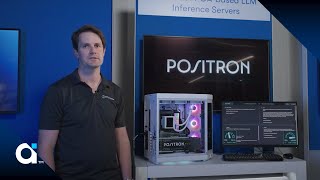
A 4U LLM-inference appliance: 8 accelerator cards on HBM-equipped Altera Agilex 7 M-series FPGAs, an OpenAI-compatible endpoint, HuggingFace weights with no recompile.
256 GB HBM · 2,000 W system vs 5,900 W for a DGX H200
Vendor-claimed >4× perf/W and >3× perf/$ vs NVIDIA Hopper
Shipping. Oracle Cloud purchase agreement, 344 servers (~$50M); Cloudflare a named customer.

Smart cameras that hand you the fabric: the image path is yours to program, with peak/blob detection and compression as in-camera IP cores.
25 MP at 150 fps · >50% of the programmable logic left free for your own IP
No on-camera neural inference out of the box — the fabric is the product
Shipping; listed in AMD's Kria partner showcase as an industrial smart camera.

A CoaXPress frame grabber that preprocesses in the FPGA before the host ever sees a pixel — programmed graphically in VisualApplets, no HDL.
KU3P + 1.5 GB DDR4 · 4 × CXP-12 at 12.5 Gbps = 50 Gbps into PCIe
The proof that FPGA-in-the-image-path is a mainstream, purchasable product
Shipping from stock. Basler's ace 2 Pro also compresses inside the camera's FPGA.

A datacenter LLM & multimodal inference ASIC — RNGD (“Renegade”) takes on GPU inference with Furiosa's Tensor Contraction Processor architecture.
48 GB HBM3 · 180 W TDP · Tensor Contraction Processor
LG AI Research: ~2.25× LLM inference perf/W vs GPUs (customer-published)
Sampling to customers; validated by LG AI Research (EXAONE) and partnered with Broadcom on rack-scale inference.
Product photos © their respective manufacturers.
Positron proves an FPGA can win a datacenter inference contract — on memory-bound decode, where the fabric is strongest. The FPGA figures here are vendor-published; the one ASIC, FuriosaAI’s RNGD, is the outlier with public MLPerf results.
Project Catapult put a reconfigurable fabric into Azure's servers at fleet scale — Bing ranking gained 50% throughput, Brainwave served DNNs in real time, and the same fabric carries Azure Accelerated Networking on SmartNICs today.
Second-generation FPGA instances went GA in Dec 2024: up to eight FPGAs per instance, each with 16 GB of HBM, behind 100 Gbps networking — and expanded to four more regions in Nov 2025. Anyone can rent datacenter fabric today.
Positron's Agilex-based Atlas appliances won a datacenter LLM-inference deployment — tens of millions of dollars of racks in Oracle Cloud — and the market answered: a $51.6M Series A, then a $230M Series B at a $1B+ valuation backed by Arm and Jump Trading.
The honest caveat: the drop-in PCIe accelerator card did lose — Mipsology's Zebra, the Alveo inference cards and Dell's FPGA PowerEdge were all retired.41 What survives is the fabric where its structure wins: in the network path at fleet scale, as rentable cloud silicon, and on memory-bound decode — the same structural edge the SoC-FPGA has at the edge.
A curated viewing list across this brief's themes. The tiles tagged × FPGA are the five workloads scored in §11 — LLM, SLM, CNN, VLM and ASR — so every area we claim is feasible has a talk or a running demo behind it.
Every tile links to a specific talk or demo on YouTube; each id was resolved live against YouTube (2026-07). Video content © respective creators / vendors.
Three returns that compound: a research platform, a product line customers already buy, and a moat hyperscalers pay billions to build.
A reconfigurable platform to co-design models and hardware, architectures, quantization, sparsity, dataflow.
A line customers already buy, SoMs, accelerator IP, an SDK and vertical solutions, hardware plus recurring software revenue.
Owning model + compiler + silicon is the durable advantage hyperscalers chase with custom chips.19
FPGA is the on-ramp to custom silicon. Validate an architecture with near-zero NRE, win early customers, and commit to an ASIC only once volume and architecture are proven.21
Plug the device in, pick a service, and the FPGA reconfigures itself to run it, on the camera, the mic, the antenna, in real time. Every service in the catalog also opens a console — upload a photo to the vision pipeline, talk to the audio service, chat with the on-device model.
14:02:01.402oksignature verified · ed25519 · fabriq-catalog14:02:01.664infoquiesce dataflow · drain in-flight buffers14:02:01.905execPL partial reconfig → RP_0 · icap @ 200 MHz14:02:02.331okbitstream loaded · crc ok · 1408 DSP tiles claimed14:02:02.470infomap DMA rings · bind /dev/video0 → axi-dma.014:02:02.688okvision-flow running · 62 FPS @ 3.1 W14:02:02.9statthroughput 62 FPS · lat 9.6 ms · pwr 3.0 W · pl 58% · 41.5 °Cfabriq@edge-01:~$